Last month, we were delighted to award the inaugural round of Whetstone Connectivity Fund (WCF) grants. The fund is named after Linda Whetstone, the indefatigable advocate for liberty who inspired and laid the groundwork for much of the work we continue today. This new initiative was designed to address a real challenge: many of our partners struggle to access affordable, consistent, and high-speed internet. Six of the bottom 10 countries in the world for average fixed broadband speeds are African, due to poor infrastructure, challenging geography, and low economic development.
For partner organisations, this issue adds unnecessary friction to day-to-day activities, wastes countless man-hours, and increases costs. Fundamentally, slow and unreliable internet prevents partners from doing what they do best: effectively spreading the ideas of freedom in their home countries. But with the arrival of Starlink and its rollout to over 150 countries worldwide, a high-quality, low-cost solution now exists.
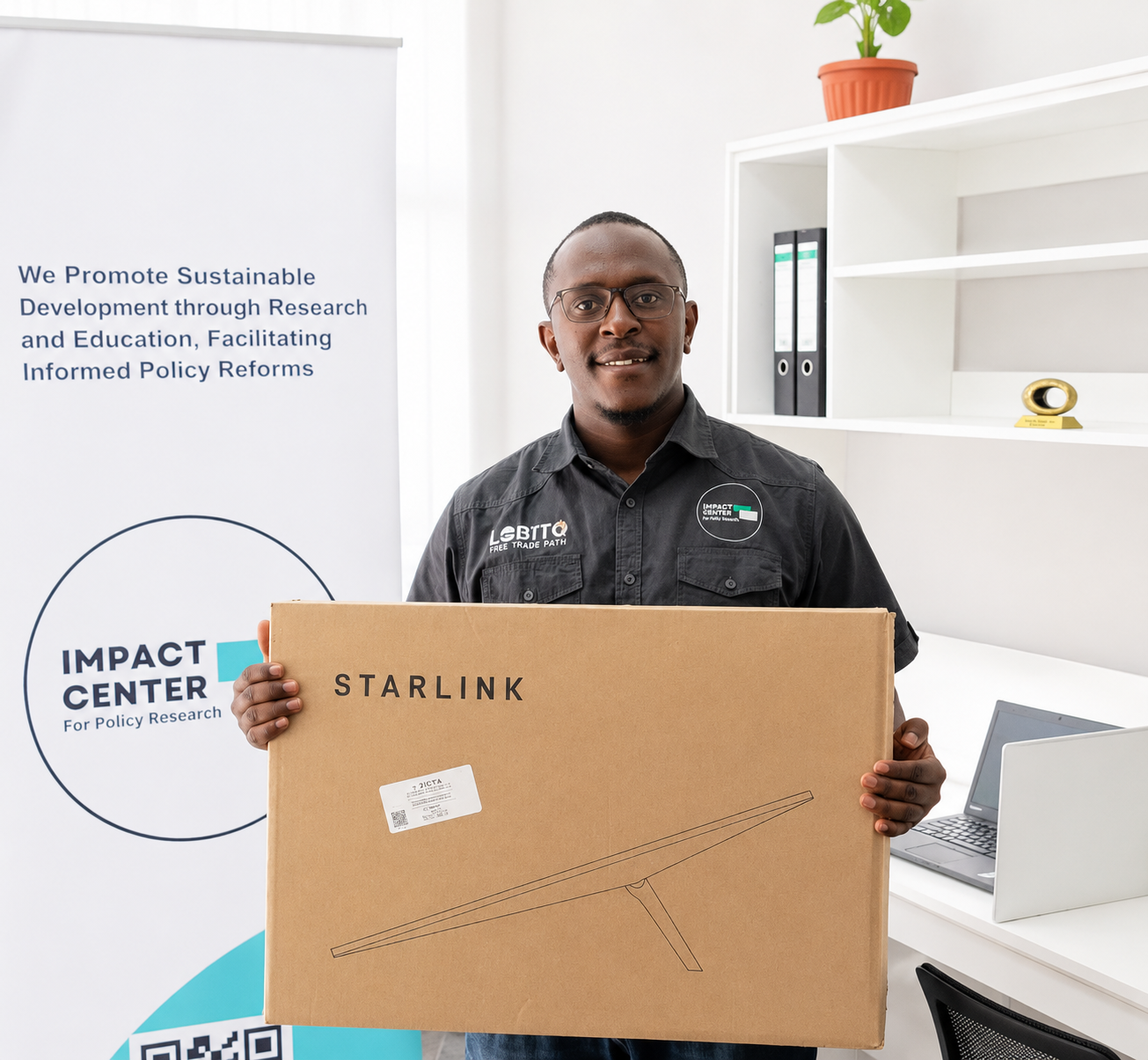
WCF grants are intended to support partners to set up a Starlink terminal and cover the costs of a one-year subscription. In doing so, we hope to directly expand their capacity to do more work online more efficiently, while relieving them of what is often one of the most persistent and frustrating challenges they face. Moreover, Starlink has demonstrated its ability to help pro-liberty activists, educators, and dissidents circumvent censorship and communications blackouts imposed by authoritarian regimes, another critical concern for many of our partners.
The original pilot to test this concept was with an IATP partner. After receiving a Starlink terminal, their internet speed was 15 times faster than before. When reflecting on the impact it had on their connectivity, their CEO said:
“If think tanks like mine gain access to Starlink, it would be a game changer for the liberty movement in the developing world.”
Applications opened in late February to partners in the IATP and global Whetstone Freedom Fund (WFF) networks. After review, we supported 15 organisations, of which 14 were based in Africa. We hope this will prove to be a game-changer for those partners for years to come.
Alexander Hammond is Deputy Editor of HumanProgress.org and Policy Analyst at the Cato Institute, IATP Founder, and member of the Whetstone Freedom Fund Advisory Council.
To find out more about and support the Whetstone Freedom Fund’s work supporting partners to improve their connectivity, contact Harrison Griffiths at hgriffiths@whetstonefund.org.
Alexander C. R. Hammond
Director of the Initiative for African Trade and Prosperity
Alexander C. R. Hammond is the Director of the Initiative for African Trade and Prosperity, a Free Trade Fellow at the Institute of Economic Affairs, and a Senior Fellow at African Liberty.

Last month, we were delighted to award the inaugural round of Whetstone Connectivity Fund (WCF) grants. The fund is named after Linda Whetstone, the indefatigable advocate for liberty who inspired and laid the groundwork for much of the work we continue today. This new initiative was designed to address a real challenge: many of our partners struggle to access affordable, consistent, and high-speed internet. Six of the bottom 10 countries in the world for average fixed broadband speeds are African, due to poor infrastructure, challenging geography, and low economic development.
For partner organisations, this issue adds unnecessary friction to day-to-day activities, wastes countless man-hours, and increases costs. Fundamentally, slow and unreliable internet prevents partners from doing what they do best: effectively spreading the ideas of freedom in their home countries. But with the arrival of Starlink and its rollout to over 150 countries worldwide, a high-quality, low-cost solution now exists.
WCF grants are intended to support partners to set up a Starlink terminal and cover the costs of a one-year subscription. In doing so, we hope to directly expand their capacity to do more work online more efficiently, while relieving them of what is often one of the most persistent and frustrating challenges they face. Moreover, Starlink has demonstrated its ability to help pro-liberty activists, educators, and dissidents circumvent censorship and communications blackouts imposed by authoritarian regimes, another critical concern for many of our partners.
The original pilot to test this concept was with an IATP partner. After receiving a Starlink terminal, their internet speed was 15 times faster than before. When reflecting on the impact it had on their connectivity, their CEO said:
“If think tanks like mine gain access to Starlink, it would be a game changer for the liberty movement in the developing world.”
Applications opened in late February to partners in the IATP and global Whetstone Freedom Fund (WFF) networks. After review, we supported 15 organisations, of which 14 were based in Africa. We hope this will prove to be a game-changer for those partners for years to come.
Alexander Hammond is Deputy Editor of HumanProgress.org and Policy Analyst at the Cato Institute, IATP Founder, and member of the Whetstone Freedom Fund Advisory Council.
To find out more about and support the Whetstone Freedom Fund’s work supporting partners to improve their connectivity, contact Harrison Griffiths at hgriffiths@whetstonefund.org.
Alexander C. R. Hammond
Alexander C. R. Hammond is the Director of the Initiative for African Trade and Prosperity, a Free Trade Fellow at the Institute of Economic Affairs, and a Senior Fellow at African Liberty.